
Iris - The Iridescent Artist

Flowering out of the darkest time of year, bringing us light medicine - from ocular health to creative expression.
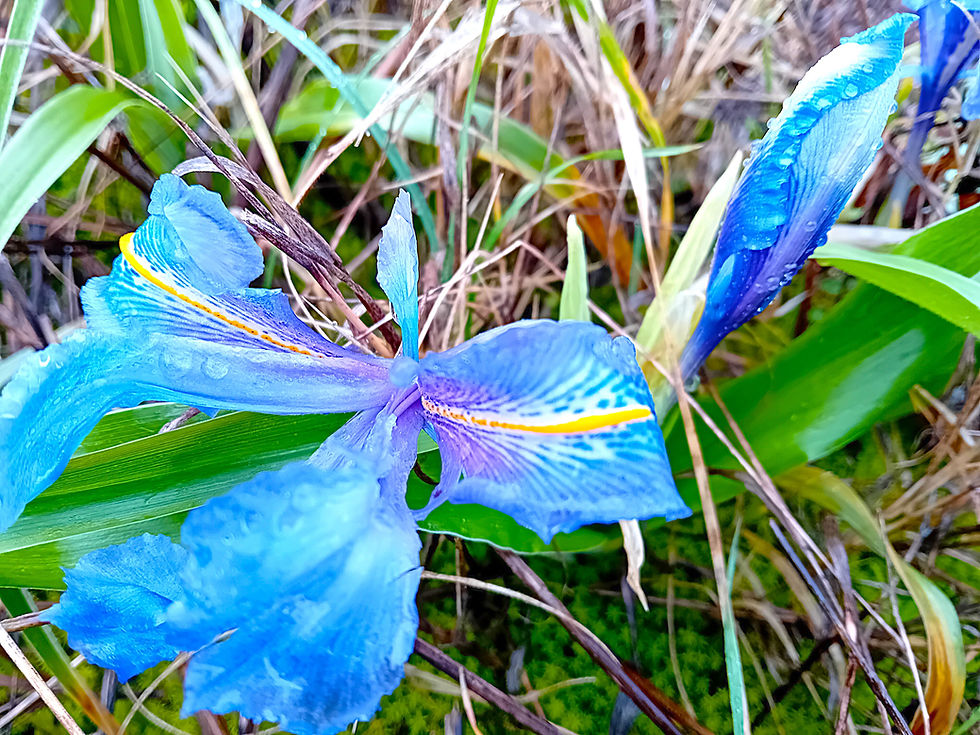
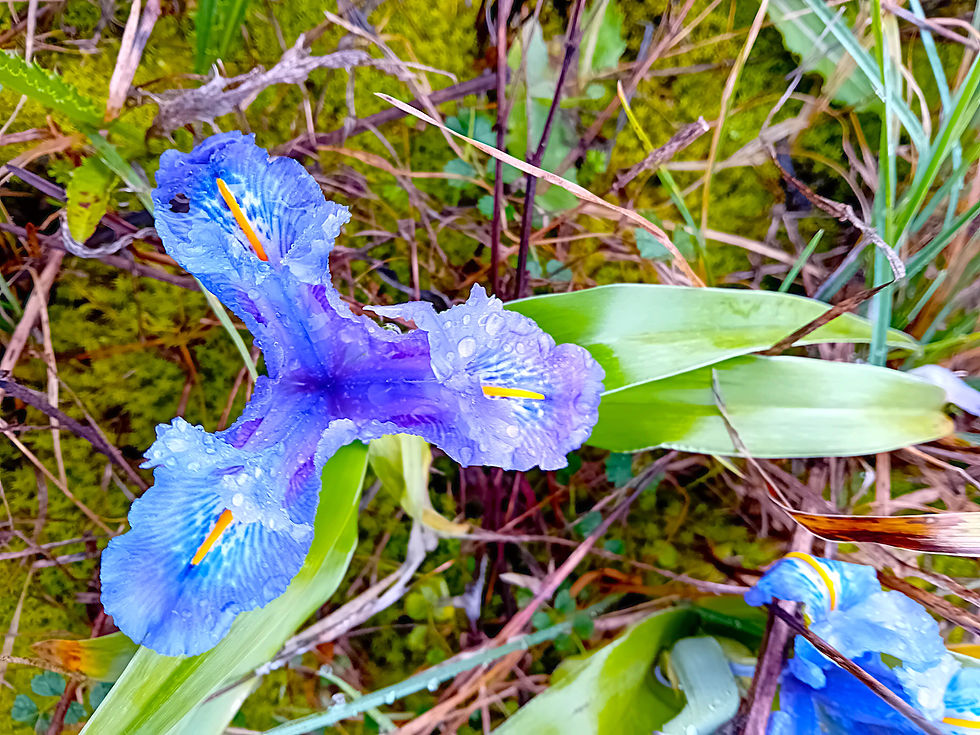
Latin name: Iris planifolia
Date observed: 22/01/26
Location observed: Rabaçal, Penela, Central Portugal
iNaturalist link: Iris planifolia from EM563, 3230, Portugal on 22 January, 2026 at 09:36 AM by Holistic-insight.pt · iNaturalist
Reading The Meadow
Irises were aptly named after Iris, the Olympian goddess, who travelled on rainbows, delivering messages from the Gods to mortals.
Classically known for their vibrant royal purple colour, marked with striking energetic orange stripes, the extended Iris family blooms into an artist’s palette; a rainbow of colours.
Iris, the plant of light/iridescence, requires a hot/dry summer to light-charge or “bake” and when the darkest/shortest days arrive, Iris planifolia is one of the first flowers to bloom in the barren winter mediterranean landscape.
Iris Medicine
Iris has a strong connection to the lymphatic system, liver, eyes and throat, normalising health imbalances involving these areas of the body.
Medical literature generally refers to Iris versicolor, having an extensive evidence-base for its use, though many of the uses are interchangeable to varying degrees, within the Iris species.
Just as the plant thrives in seemingly dark and barren, wintery terrain, Iris is known medically to stimulate an underactive liver and thyroid gland, which are largely responsible for the body’s metabolism. Underactivity of the liver and thyroid is broadly known clinically to produce abnormalities of the eyes and throat.
Iris enhances the production of neurotransmitters tyrosine (predominantly involved in thyroid functioning) and taurine (predominantly involved in ocular and liver functioning). Iris medicine literally mediates our vision via connections and muscles in the eye, shielding or exposing cells to/from light and sending messages via neural pathways to the brain for interpretation. Stimulation of the thyroid/throat then encourages us, through our metabolism, to act upon these ideas.
Medical literature describes the use of Iris versicolor roots/rhizomes, taken as an alcoholic extract/tincture or a tea.
In comparison, Iris planifolia, and other species of Iris growing from bulb (Juno Irises) may be more appropriately used as a flower essence, due to a lack of medical literature regarding the use and preparation of Iris bulb, rather than rhizome.
Iris Spirit and Philosophy
The spiritual use and qualities of Iris douglasiana as a flower essence have been described by the Flower Essence Society as “inspired artistry, soulful creativity in touch with higher realms; radiant, iridescent vision in all aspects of life.” For those “lacking inspiration or creativity; feeling weighed down by the ordinariness of the world; dullness or spectator consciousness.”
Philosophically, we could describe the teachings of the Iris as harmonising ourselves visually and artistically within the light and colour parameters of that which we humans are able to see.
Look out for nature's emerging colour palette, as it flowers in the coming weeks!
Comments